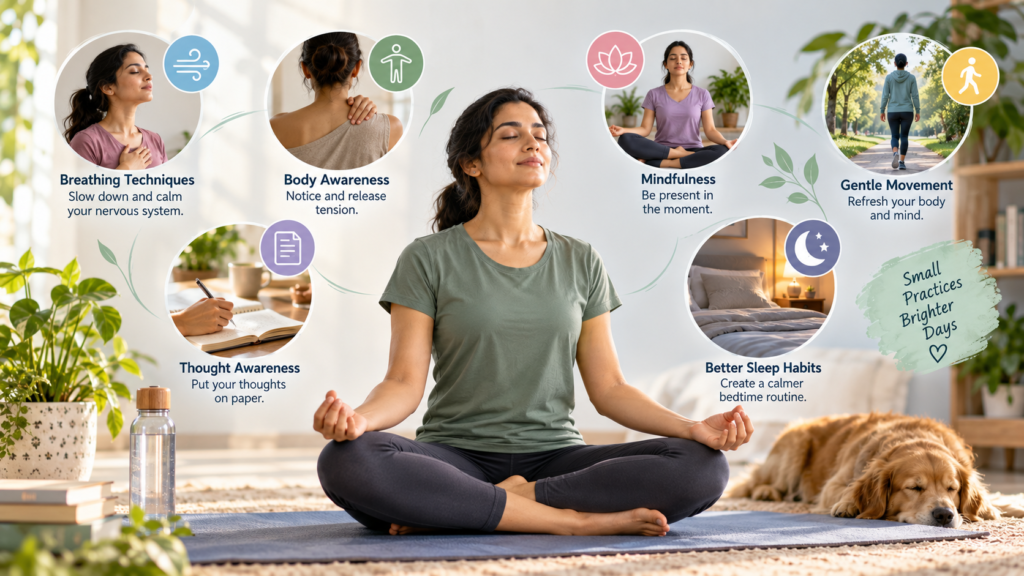
A practical guide to relaxation techniques that can help you slow down, become more aware of your body and develop healthier ways of responding to everyday stress.
Stress is part of being human.
A certain amount of stress can help us respond to challenges, stay alert and adapt to changing circumstances. But when the body and mind remain in a state of tension for too long, the experience can become exhausting.
The shoulders remain tight.
The mind keeps replaying conversations.
Sleep becomes difficult.
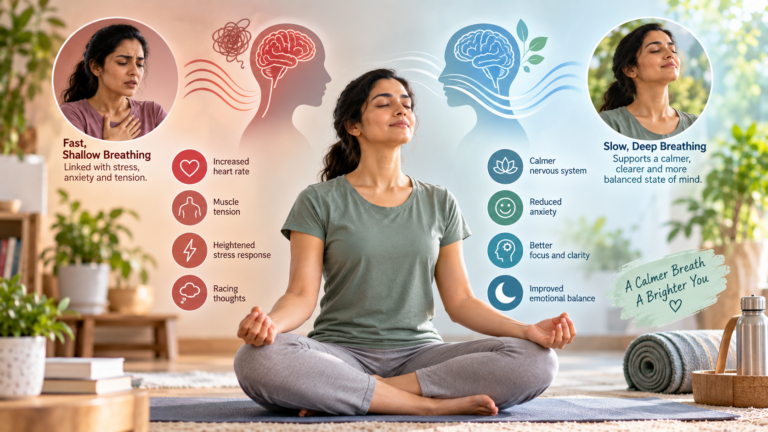
Breathing may become faster or shallower.
The stomach may feel unsettled.
Small problems begin to feel disproportionately demanding.
At such times, relaxation is not simply about “thinking positively.”
Relaxation involves giving the body and mind an opportunity to shift away from continuous alertness.
In my approach to health, I consider relaxation an important part of preventive and whole-person wellbeing. It is not a replacement for medical treatment or professional mental-health care when those are needed. Rather, it is one of the everyday skills that can help us care for ourselves more intelligently.
The good news is that relaxation does not have to mean spending an hour in silence.
It can begin with something as simple as one conscious breath.
This article introduces practical relaxation approaches involving breathing, body awareness, mindfulness, gentle movement and meditation—and explains how to use them safely in everyday life.
What Is Relaxation?
Relaxation is more than simply lying down.
You can be physically still while your mind remains highly activated.
True relaxation involves a reduction in unnecessary physical and mental tension and a greater sense of ease.
It may involve:
- Slower, more comfortable breathing
- Reduced muscle tension
- A quieter or less reactive mind
- Greater awareness of the present moment
- Reduced physical agitation
- A sense of safety and rest
Relaxation is therefore both a state and a skill.
Like physical fitness, it can become easier with practice.
Why Do We Need Relaxation?
The human nervous system constantly responds to the environment.
During demanding situations, the body may become more alert and prepared for action.
This is useful when you need to respond to an immediate challenge.
The problem arises when high alertness becomes the default state even after the challenge has passed.
You may notice:
- Persistent muscle tension
- Restlessness
- Irritability
- Racing thoughts
- Difficulty concentrating
- Sleep difficulties
- Changes in appetite
- Digestive discomfort
- Feeling unable to “switch off”
Relaxation practices can provide an opportunity to interrupt this cycle.
They do not remove life’s problems.
They can help change how we meet them.
Relaxation Is Not the Same as Avoiding Problems
This distinction is important.
Relaxation does not mean:
“Ignore everything and pretend everything is fine.”
If there is a genuine problem, it may require action.
If you have a medical symptom, it may require medical evaluation.
If you are experiencing significant anxiety or depression, you may need professional mental-health support.
Relaxation is not avoidance.
It is a way of creating enough internal space to respond more clearly.
The Nervous System and the Stress Response
The autonomic nervous system helps regulate many automatic functions of the body, including heart rate, breathing, digestion and blood-vessel activity.
During stress, the body may shift toward a state of increased alertness.
After the stressful situation passes, the body needs opportunities to recover and return toward a more settled state.
This balance is part of normal physiology.
Relaxation practices may support this process by encouraging slower breathing, reducing muscular tension and shifting attention away from continuous threat monitoring.
However, no single relaxation technique should be described as a guaranteed way to “reset” or “switch off” a particular part of the nervous system.
Human physiology is more complex than that.
Technique 1: Conscious Breathing
Breathing is one of the simplest places to begin because it is always with us.
You do not need special equipment.
You do not need a particular location.
You can begin almost anywhere.
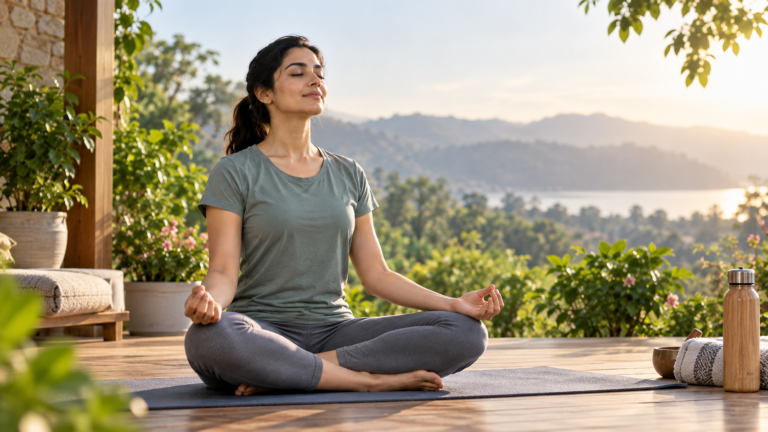
Sit comfortably.
Notice your natural breathing.
Feel the movement of the abdomen or chest.
Notice the beginning of the inhalation.
Notice the end of the inhalation.
Then observe the exhalation.
You do not need to force the breath.
Simply observe it.
Continue for two to five minutes.
This basic practice can become a foundation for more structured breathing techniques.
Technique 2: Gentle Lengthening of the Exhalation
Some people find it calming to allow the exhalation to become slightly longer than the inhalation.
For example:
Comfortable inhale → relaxed, slightly longer exhale
Do not force the breath or hold it unnecessarily.
The objective is comfort, not performance.
If you feel dizzy, breathless or uncomfortable, stop and return to normal breathing.
This practice is particularly useful when you are beginning to notice that stress has changed your breathing pattern.
Technique 3: Diaphragmatic or Abdominal Breathing
Many people naturally breathe using movement of the diaphragm and abdomen.
When stressed, however, breathing may become more rapid and predominantly upper-chest based.
A gentle abdominal-breathing practice can increase awareness of how you breathe.
Try this:
- Lie down or sit comfortably.
- Place one hand on the upper chest and the other on the abdomen.
- Breathe naturally.
- Notice which hand moves more.
- Gradually allow the abdomen to move comfortably with the breath.
- Keep the breathing soft rather than deliberately deep.
There is no need to take very large breaths.
Comfortable breathing is more important than deep breathing.
Technique 4: Body Scan
The body often tells us that we are stressed before the mind fully recognises it.
A body scan helps you notice those signals.
Sit or lie comfortably.
Bring attention gradually to:
- Forehead
- Eyes
- Jaw
- Neck
- Shoulders
- Chest
- Abdomen
- Hands
- Back
- Legs
- Feet
At each area, ask:
“Can I soften unnecessary tension here?”
You do not have to make the body completely relaxed.
Simply notice.
You may discover that you have been tightening your jaw or shoulders without realising it.
Awareness itself is valuable.
Technique 5: Progressive Muscle Relaxation
Progressive muscle relaxation involves deliberately tensing and then relaxing different muscle groups.
For example:
- Bring attention to your hands.
- Gently tense them for a few seconds.
- Release.
- Notice the difference.
- Move gradually through other muscle groups.
The key word is gently.
Do not create pain or excessive tension.
People with injuries, chronic pain or certain medical conditions may need to modify this technique or avoid deliberate muscle contraction in affected areas.
When in doubt, choose simple awareness rather than forced tension.
Technique 6: Mindful Walking
Relaxation does not have to happen while sitting.
Walking can become a mindfulness practice.
Walk at a comfortable pace.
Notice:
- Your feet touching the ground
- The movement of your legs
- Your breathing
- The movement of your arms
- Sounds around you
- Light and temperature
- The environment
When the mind wanders, gently return attention to walking.
You are not trying to stop thoughts.
You are practising the ability to return attention.
This can be particularly useful for people who find seated meditation difficult.
Technique 7: Mindful Eating
Eating is another opportunity for awareness.
Instead of automatically consuming a meal while working or scrolling, occasionally try:
- Looking at your food
- Noticing its aroma
- Taking smaller bites
- Chewing thoroughly
- Noticing flavour and texture
- Paying attention to fullness
This connects naturally with digestive health.
Mindful eating is not a special diet.
It is a way of changing your relationship with the act of eating.
For more on this, see DG-011 — Food and Digestive Health: How Eating Habits Influence Digestion.
Technique 8: Guided Relaxation
Some people find it easier to relax when someone guides them.
A guided relaxation may involve instructions to:
- Observe the breath
- Relax different parts of the body
- Visualise a peaceful environment
- Notice sensations
- Allow thoughts to come and go
The advantage is that you do not have to remember every step.
However, choose practices from trustworthy sources and stop if a technique makes you uncomfortable or distressed.
Technique 9: Meditation
Meditation is often misunderstood.
It is not necessarily about eliminating thoughts.
Thoughts will arise.
The practice is learning to notice them without automatically following them.
You might use:
- Breath as an anchor
- Body sensations
- Sounds
- A repeated phrase
- Open awareness
For example, you may notice:
“I am thinking about tomorrow.”
Instead of continuing the mental story, gently return attention to the breath.
Then another thought may arise.
Again, return.
This repeated process is the practice.
Technique 10: Journaling
Sometimes the mind remains active because it is trying to remember everything.
Writing can help externalise some of those thoughts.
Before bed, you might write:
- Things I need to remember tomorrow
- Things I cannot solve tonight
- One thing I am grateful for
- One thing I can do tomorrow
The objective is not to produce beautiful writing.
It is simply to reduce mental clutter.
If journaling increases rumination rather than reducing it, choose another technique.
Technique 11: Gentle Yoga
Yoga can combine several relaxation-supporting elements:
- Physical movement
- Breath awareness
- Attention
- Relaxation
- Meditation
A gentle evening practice might include comfortable movements rather than demanding physical postures.
The goal is not to achieve difficult poses.
It is to develop a more comfortable relationship between body, breath and attention.
Yoga is not a cure for anxiety or insomnia, but it may be a useful part of a broader wellbeing programme.
For a broader introduction, see YG-001 — Yoga for Health.
Technique 12: Yoga Nidra and Guided Rest
Yoga nidra is a traditional yogic practice involving guided awareness and deep relaxation.
Different traditions teach it in different ways.
It is often practised lying comfortably while following a guided sequence involving awareness of the body, breath and mental imagery.
It may be a useful relaxation practice for some people.
It should not, however, be presented as a substitute for diagnosis or treatment of significant sleep or mental-health disorders.
How Long Should You Relax?
There is no universal minimum duration.
If you have never practised relaxation before, start with:
2–5 minutes.
Once that becomes comfortable, you might try:
10 minutes.
Some people eventually enjoy:
15–20 minutes or longer.
But longer is not automatically better.
A five-minute practice performed consistently may be more useful than a one-hour practice attempted once every few weeks.
When Is the Best Time to Practise?
There are several possibilities.
Morning
A short practice can help you begin the day with greater awareness.
During Work
A two-minute breathing pause can interrupt prolonged tension.
Before Meals
A moment of calm may help you shift attention away from rushing and toward eating.
After Work
This can create a transition between professional responsibilities and personal life.
Before Bed
Gentle relaxation can form part of a wind-down routine.
The best time is often the time you can sustain.
A Two-Minute Stress Pause
You do not always need a formal meditation session.
Try this:
First 30 seconds
Stop what you are doing.
Notice your posture.
Relax your jaw.
Drop your shoulders.
Next 30 seconds
Notice your breathing without changing it.
Next 30 seconds
Take a few comfortable, unhurried breaths.
Final 30 seconds
Ask yourself:
“What is the next useful thing I need to do?”
Then continue.
This small pause can help create a gap between an automatic reaction and a deliberate response.
A Five-Minute Evening Relaxation
Try this simple sequence:
Minute 1: Notice your breathing.
Minute 2: Relax your jaw, shoulders and hands.
Minute 3: Scan the body for areas of unnecessary tension.
Minute 4: Allow the breath to become comfortable and unhurried.
Minute 5: Sit quietly without trying to accomplish anything.
Then move into your normal bedtime routine.
What If Relaxation Makes Me More Anxious?
This can happen.
Some people become more aware of uncomfortable thoughts or bodily sensations when they become quiet.
For example, someone who spends the entire day distracted may suddenly notice:
- Racing thoughts
- Anxiety
- Pain
- Rapid heartbeat
- Emotional distress
This does not mean relaxation is “wrong.”
But it does mean you should adapt the practice.
Try:
- Keeping the eyes open
- Practising while walking
- Using external sounds as an anchor
- Shortening the session
- Focusing on the environment rather than internal sensations
If relaxation consistently causes significant distress, discuss this with a qualified mental-health professional.
What If I Feel Dizzy During Breathing Exercises?
Stop.
Return to normal breathing.
Dizziness can occur when people unintentionally breathe too deeply or rapidly.
Relaxation breathing should be:
- Comfortable
- Gentle
- Unforced
There is no prize for taking the biggest breath.
This is especially important with techniques involving breath retention or rapid breathing.
More intense breathing practices are not appropriate for everyone.
If you have a medical condition affecting breathing or circulation, obtain appropriate professional guidance before undertaking intensive breathwork.
Relaxation and Digestive Health
The gut–brain relationship makes relaxation particularly relevant to digestive wellbeing.
Stress can influence gastrointestinal symptoms in some people.
A stressful period may coincide with:
- Bloating
- Indigestion
- Changes in bowel habits
- Abdominal discomfort
- Appetite changes
Relaxation may help reduce one contributing factor—stress—but it should not be used to explain away persistent gastrointestinal symptoms.
For more on this connection, see:
DG-005 — Understanding the Gut–Brain Connection
and
DG-012 — How Stress Affects Digestion.
Relaxation and Sleep
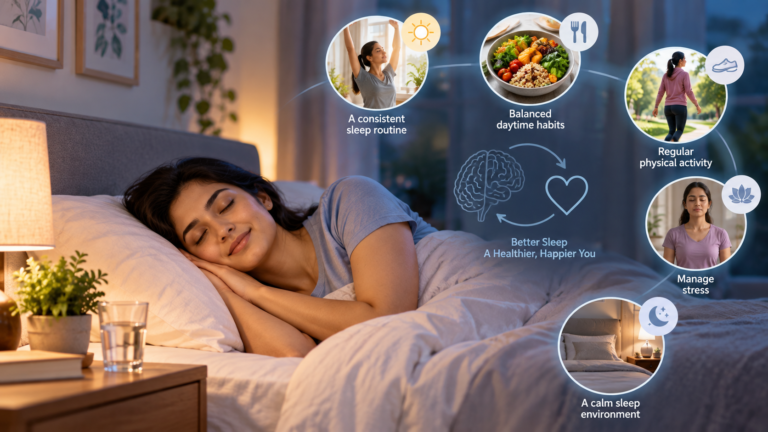
Relaxation practices can also become part of a healthy sleep routine.
A short practice before bed may help create a transition from activity to rest.
Consider:
Work → dinner → gentle movement → reduced stimulation → relaxation → sleep
If persistent insomnia continues despite healthy habits, do not assume that you simply need to relax harder.
Chronic insomnia may require structured treatment such as cognitive behavioural therapy for insomnia or other appropriate clinical approaches.
Relaxation and Anxiety
Relaxation can be useful for managing everyday stress.
But anxiety disorders are more than occasional nervousness.
If anxiety is:
- Persistent
- Excessive
- Difficult to control
- Interfering with work or relationships
- Affecting sleep significantly
- Causing avoidance of normal activities
professional assessment may be appropriate.
Relaxation techniques can complement treatment.
They should not become the only response to significant anxiety.
Relaxation Is Not the Same as “Positive Thinking”
You may have heard advice such as:
“Just think positive.”
For someone experiencing significant stress, this can feel dismissive.
Relaxation does not require pretending that everything is good.
Instead, it can help create enough mental space to acknowledge reality without becoming completely overwhelmed by it.
You can think:
“This situation is difficult, and I can take one step at a time.”
That is different from pretending that the problem does not exist.
Ayurveda and Relaxation
Ayurvedic tradition places importance on daily routine, rest, mental balance and lifestyle.
Traditional practices may include approaches involving:
- Routine
- Gentle movement
- Breathing
- Meditation
- Self-care
- Appropriate diet
- Sleep
- Contemplative practices
These belong to a traditional framework and should not be interpreted as direct equivalents of modern medical physiology.
The broader principle of cultivating regularity and balance can nevertheless be meaningful when integrated thoughtfully into contemporary lifestyle care.
The Yogic Perspective on Relaxation
Yoga traditionally views health as involving more than the physical body.
Practices may involve:
- Asana — physical postures
- Pranayama — breath regulation
- Pratyahara — turning attention inward
- Dharana — concentration
- Dhyana — meditation
- Relaxation and contemplative practices
Different schools interpret these concepts differently.
From a practical modern perspective, many yoga practices provide opportunities to combine movement, breathing, attention and relaxation.
This can make yoga a valuable component of a broader whole-person approach.
It should still be practised appropriately for the individual’s physical and mental health.
A Seven-Day Relaxation Practice
Rather than trying every technique, choose one or two.
Day 1 — Breathing. Practise conscious breathing for five minutes.
Day 2 — Body Awareness. Perform a five-minute body scan.
Day 3 — Mindful Walking. Walk for ten minutes while paying attention to movement and surroundings.
Day 4 — Gentle Yoga. Practise comfortable movements for 10–15 minutes.
Day 5 — Meditation. Sit quietly for five to ten minutes and use the breath as an anchor.
Day 6 — Digital Pause. Spend 30 minutes in the evening without unnecessary screen stimulation.
Day 7 — Choose Your Practice. Repeat the technique that felt most natural.
The purpose is not to become an expert in seven days.
It is to discover what fits your life.
A Simple Relaxation Toolkit
You can think of relaxation as a toolbox rather than a single technique.
When you have only one minute: Pause and breathe.
When you have five minutes: Body scan or conscious breathing.
When you have ten minutes: Meditation or guided relaxation.
When you feel physically restless: Gentle walking or yoga.
When your mind is crowded: Journaling.
Before sleep: Gentle breathing, body awareness or quiet meditation.
Having several options makes it easier to practise consistently.
Common Mistakes When Starting Relaxation Practices
Trying to relax perfectly
Relaxation is not a performance.
Holding the breath unnecessarily
Breathing should remain comfortable.
Choosing techniques that are too intense
More intensity does not mean more benefit.
Expecting immediate results
Some practices become more useful with repetition.
Using relaxation to avoid medical care
This can be dangerous.
Giving up because the mind wanders
Mind wandering is normal. The practice is returning attention.
When Relaxation Is Not Enough
There are situations where relaxation practices should be considered supportive rather than sufficient.
Seek professional help if you are experiencing:
- Severe or persistent anxiety
- Persistent depression
- Panic attacks
- Significant sleep disturbance
- Trauma-related symptoms
- Thoughts of self-harm
- Major impairment in daily functioning
If you are in immediate danger or thinking about harming yourself, seek urgent local emergency or crisis support rather than relying on a relaxation exercise.
Similarly, new or severe physical symptoms should be medically evaluated rather than attributed automatically to stress. If any of this applies to you, arranging a consultation is a reasonable next step.
Building a Sustainable Practice
The most effective relaxation practice is not necessarily the most sophisticated.
It is the one you actually continue.
You might begin with:
5 minutes a day × 7 days
rather than:
60 minutes once a month.
Think of relaxation as a form of mental and physical hygiene.
We brush our teeth regularly rather than waiting until there is a major problem.
In a similar way, small moments of recovery throughout the day may be more practical than waiting until we are completely exhausted.
The Whole-Person Perspective
Relaxation becomes more meaningful when it is part of a broader lifestyle.
Consider these foundations:
Sleep. Give the body adequate opportunity to recover.
Food. Eat in a way that supports nutrition and digestive comfort.
Movement. Use the body regularly.
Breathing. Develop awareness of how stress changes your breathing.
Attention. Notice where your mind is going.
Relationships. Maintain supportive human connections.
Purpose. Have meaningful activities and values that guide your life.
Medical care. Seek appropriate diagnosis and treatment when necessary.
No relaxation technique can compensate completely for severe sleep deprivation, untreated illness, harmful substance use or significant psychological distress.
Whole-person health requires a broader view.
Five Principles to Remember
1. Relaxation is a skill.
You can practise becoming more aware of tension and developing healthier responses.
2. Start small.
Two or five minutes is enough to begin.
3. Comfortable breathing matters more than deep breathing.
Never force the breath.
4. Mind wandering is normal.
The practice is returning attention, not eliminating thoughts.
5. Relaxation complements healthcare.
It does not replace appropriate medical or mental-health treatment.
Frequently Asked Questions
What is the simplest relaxation technique?
For many people, simply noticing the natural breath for a few minutes is an accessible place to begin. You do not need to force deep breathing.
How long should I practise relaxation?
Start with two to five minutes and increase gradually if it feels comfortable. Consistency is usually more practical than long, occasional sessions.
Can breathing exercises reduce stress?
Comfortable breathing practices can be useful components of stress management. Their effects vary between individuals, and they should not be presented as a cure for anxiety or other medical conditions.
Can relaxation help with sleep?
Relaxation can be part of a healthy bedtime routine and may help some people settle. Persistent insomnia may require specific clinical treatment.
Can yoga help with stress?
Yoga combines movement, breathing and attention and may support stress management and wellbeing. It should complement rather than replace appropriate healthcare.
Why do I feel more anxious when I meditate?
Some people become more aware of thoughts or bodily sensations when they become quiet. Try shorter sessions, walking meditation, eyes-open practice or an external focus. If meditation consistently causes significant distress, seek professional guidance.
Is deep breathing always better?
No. Very deep or rapid breathing can cause discomfort or dizziness in some people. Relaxation breathing should be comfortable and unforced.
Can relaxation cure digestive problems?
No. Relaxation may help when stress contributes to digestive symptoms, but digestive conditions have many possible causes and may require medical evaluation and treatment.
Can I practise relaxation while working?
Yes. Brief practices such as conscious breathing, posture awareness or a short movement break can be incorporated into the working day.
Final Thoughts: Learning to Pause
Modern life often rewards constant activity.
We are encouraged to respond immediately, stay connected continuously and move quickly from one task to another.
But the human body needs periods of recovery.
Relaxation gives us an opportunity to pause.
Not to escape life.
Not to ignore problems.
Not to become permanently calm.
Simply to create a little space between what happens and how we respond.
Sometimes that space begins with one breath.
Sometimes it comes through a walk.
Sometimes through yoga, meditation, prayer, quiet reflection or meaningful conversation.
The technique itself is less important than developing the ability to recognise tension and respond with greater awareness.
In my view, this is one of the most practical lessons of whole-person health:
We do not need to wait until we are exhausted before we begin caring for ourselves.
Small moments of awareness, repeated consistently, can become part of a healthier way of living.
Pause.
Breathe.
Notice.
Relax.
Respond consciously.
And when stress becomes more than you can manage alone, remember that seeking professional help is also an act of self-care.
Related Reading
Visit the Yoga & Mind-Body topic page for the full range of mind-body content on this site.
The following related articles are part of the approved content corpus; several are not yet migrated to WordPress and are listed here as plain text rather than linked, per the project’s no-fabricated-link rule.
- MB-001 — Stress and Anxiety: Understanding the Mind–Body Connection and Supporting Better Health
- MB-002 — Sleep and Mental Wellbeing: Understanding the Mind–Body Connection
- MB-008 — Breathing Patterns & States of Mind: Understanding the Connection Between Breath, Body and Mind
- DG-005 — Understanding the Gut–Brain Connection: How Stress, Emotions and Digestion Interact
- DG-012 — How Stress Affects Digestion: Understanding the Gut–Brain Response
- YG-001 — Yoga for Health: A Practical Guide to Movement, Breath, Mind and Whole-Person Wellbeing
- YG-002 — Yoga for Stress Management: Practices for Relaxation, Awareness and Better Wellbeing
- AY-001 — Ayurvedic Diet: Traditional Principles for Everyday Health and Whole-Person Wellbeing
- Holistic Health: A Practical Guide to Whole-Person Wellbeing
- HH-002 — Integrative Medicine and Holistic Health: Bringing the Whole Person Into Healthcare
Medical Disclaimer
This article is intended for general educational purposes and does not constitute individual medical advice, diagnosis or treatment. Relaxation, breathing, meditation and yoga practices may support general wellbeing but are not substitutes for appropriate medical or mental-health care. Stop any practice that causes pain, dizziness, breathlessness or significant distress. People with medical or psychological conditions should seek appropriate professional guidance when needed. If you are experiencing severe psychological distress, thoughts of self-harm, or an acute medical emergency, seek urgent professional help.