Food is more than fuel.
It is part of our daily rhythm, our relationship with health and, in many traditions, a central part of preventive wellbeing.
Ayurveda places considerable emphasis on food, digestion, daily routine and individual constitution. Rather than treating diet as a rigid list of universally “good” and “bad” foods, traditional Ayurvedic thinking often considers the individual, the nature of food, the season, the time of eating and the person’s digestive experience.
At the same time, modern nutrition provides an important evidence-based framework for understanding nutrients, dietary patterns, food safety and the relationship between diet and health.
A thoughtful approach can respect both perspectives.
This article introduces a practical Ayurvedic-inspired diet framework for digestive wellbeing, while avoiding the idea that one diet is appropriate for everyone.
Important: This article is educational. Ayurvedic dietary concepts are presented as traditional principles and should not be interpreted as a diagnosis or treatment for a medical condition. If you have persistent, severe or unexplained digestive symptoms, seek appropriate medical evaluation.
What Does Ayurveda Say About Food and Digestion?
Ayurveda traditionally places great importance on Agni, often translated in this context as digestive fire.
Within Ayurvedic thought, balanced Agni is associated with the effective digestion and assimilation of food, while disturbances in digestion are traditionally described in different ways.
Ayurvedic dietary practice therefore tends to emphasize:
- appropriate food;
- appropriate quantity;
- appropriate timing;
- compatibility of foods;
- seasonal considerations;
- individual constitution; and
- mindful eating.
These concepts belong to the traditional Ayurvedic framework. They should not be confused with modern medical diagnoses or assumed to correspond exactly to specific physiological mechanisms.
The First Principle: Eat According to the Individual
There is no single Ayurvedic diet chart that should be followed identically by everyone.
Traditional Ayurveda considers individual differences, including Prakriti and the person’s current state or imbalance.
From a modern health perspective, dietary needs also vary according to:
- age;
- sex;
- body size;
- physical activity;
- medical conditions;
- medications;
- allergies;
- food intolerances;
- nutritional requirements;
- pregnancy or breastfeeding; and
- cultural food patterns.
Therefore, a useful diet plan should be individualized rather than blindly copied from a chart.
A Practical Ayurvedic-Inspired Daily Food Framework
The following is a general framework rather than a rigid prescription. The exact foods should be adapted to the individual.
On Waking
A simple morning routine can begin with hydration. You may prefer:
- plain water;
- comfortably warm water; or
- another appropriate non-alcoholic beverage.
There is no requirement that everyone drink a specific quantity or temperature of water. Warm water may feel comfortable to some people, but it should not be presented as a universal “detox.” Your body already has physiological systems responsible for processing and eliminating waste.
Breakfast
Breakfast should be appropriate to your hunger, routine and nutritional needs. Possible options may include:
- vegetable poha;
- upma with vegetables;
- idli with suitable accompaniments;
- dosa with vegetables or other balanced additions;
- oats;
- lightly prepared traditional grains;
- eggs where appropriate;
- fruit with suitable protein-containing foods; or
- other culturally familiar balanced meals.
The goal is not to prescribe one “Ayurvedic breakfast.” The goal is to choose food that is:
- nourishing;
- reasonably balanced;
- appropriate to your digestion; and
- practical for your lifestyle.
Mid-Morning
A mid-morning snack is not compulsory. If you are genuinely hungry, options may include:
- fresh fruit;
- appropriately portioned nuts or seeds;
- plain yoghurt or another suitable food; or
- another balanced option that fits your dietary needs.
If you are not hungry, there is no need to eat simply because the clock says it is snack time.
Lunch
Lunch can be an important opportunity to build a balanced meal. A practical plate might include:
Vegetables
Choose a variety of seasonal vegetables prepared in a way that suits you.
Protein
Depending on dietary preference:
- dal;
- pulses;
- beans;
- legumes;
- dairy foods;
- eggs;
- fish;
- poultry; or
- other protein sources.
Grains or Other Carbohydrates
Examples include:
- rice;
- roti;
- millet;
- oats; or
- other suitable whole or minimally processed grains.
Healthy Fats
Appropriate amounts of foods such as:
- nuts;
- seeds;
- oils; or
- ghee
can be included according to individual needs.
The important principle is balance rather than excess.
Spices and Digestive Health
Indian cooking traditionally uses a wide range of spices and herbs. Examples include:
- ginger;
- cumin;
- coriander;
- turmeric;
- fennel;
- cardamom;
- cinnamon;
- black pepper; and
- others.
These ingredients contribute flavour and culinary diversity. Some spices and herbs have also been studied for potential biological effects. However, it is important not to turn culinary ingredients into universal treatments. For example:
“This spice is traditionally used for digestion”
does not automatically mean:
“This spice will treat your digestive disease.”
Food and medicine are related but not identical categories.
Ginger
Ginger is widely used in Indian cuisine and traditional health practices. It can be incorporated into food or beverages according to individual preference. Some people find ginger-containing foods or drinks comfortable after meals.
However, concentrated supplements or medicinal preparations are different from ordinary culinary use and may not be appropriate for everyone. If you have a medical condition or take regular medicines, discuss concentrated herbal preparations with a qualified healthcare professional.
Cumin, Coriander and Fennel
Cumin, coriander and fennel are traditional culinary ingredients commonly used in Indian food. They can add flavour without requiring highly processed sauces or excessive salt. They may also be used in traditional digestive preparations.
As with all herbs, however, traditional use should not be confused with established treatment for a medical condition.
Dairy and Fermented Foods
Traditional Indian diets include foods such as:
- curd;
- buttermilk;
- paneer;
- milk; and
- other dairy products.
For people who tolerate dairy, these foods can contribute nutrients and, in the case of fermented products, may contain live microorganisms depending on the product and preparation. However, lactose intolerance, milk allergy and individual tolerance vary.
If dairy repeatedly causes symptoms, do not force yourself to consume it simply because it appears in a traditional dietary pattern.
Grains and Millets
Indian food traditions include a wide variety of grains. These can include:
- rice;
- wheat;
- oats;
- ragi;
- jowar;
- bajra; and
- other millets.
Millets can be nutritious additions to a varied diet. But “millet” should not become another universal health label. A food can be nutritious while still not being appropriate in unlimited quantities for every individual. Variety remains important.
Pulses and Legumes
Dal, beans, chickpeas, peas and other legumes are valuable components of many Indian diets. They provide:
- protein;
- dietary fibre;
- micronutrients; and
- other beneficial components.
However, some people experience gas or bloating when consuming large amounts of legumes. If you are increasing legumes, do so gradually and prepare them appropriately.
If symptoms are persistent or severe, investigate the cause rather than simply eliminating all legumes.
Vegetables
Aim for variety. Different vegetables provide different nutrients and types of fibre. You may include:
- leafy greens;
- gourds;
- carrots;
- beans;
- pumpkin;
- cauliflower;
- cabbage;
- beetroot;
- okra; and
- many others according to preference and tolerance.
Cooking methods can vary. Steamed, lightly cooked, sautéed, roasted or traditionally prepared vegetables can all form part of a healthy diet.
Fruits
Fruit can be an important source of:
- fibre;
- vitamins;
- minerals;
- water; and
- naturally occurring plant compounds.
Choose a variety of seasonal fruits where appropriate. There is generally no need to turn fruit into a list of “allowed” and “forbidden” foods. Individual tolerance matters, especially for people with particular digestive conditions or dietary requirements.
Nuts and Seeds
Nuts and seeds can provide:
- healthy fats;
- protein;
- fibre;
- minerals; and
- other nutrients.
Examples include:
- almonds;
- walnuts;
- peanuts;
- sesame;
- flaxseed;
- sunflower seeds; and
- pumpkin seeds.
Portion size matters because these foods are energy-dense.
Roti, Rice and Other Staple Foods
Traditional Indian diets naturally include staple carbohydrates. There is no universal reason for a healthy person to fear rice or roti. What matters is the overall dietary pattern, portion, preparation, activity level and individual nutritional needs.
If a person has a specific medical condition, carbohydrate intake may need to be individualized.
What About Ghee?
Ghee has an important place in Indian culinary and Ayurvedic traditions. It can be included as part of a balanced diet for people who tolerate it.
However, ghee is still a concentrated source of fat and energy. The fact that a food is traditional does not mean that unlimited quantities are appropriate. Use it as a food ingredient rather than automatically treating it as a medicine.
What About Spicy Food?
Spices are an important part of Indian cuisine. There is no universal requirement to avoid spicy food. However, people with reflux, gastritis-like symptoms or other digestive sensitivities may notice that certain spicy or heavily seasoned foods worsen their symptoms.
The practical approach is:
Observe your response rather than following a universal rule.
How Much Should You Eat?
Traditional Ayurvedic thinking places importance on appropriate quantity. Modern nutrition also recognizes the importance of energy balance and portion awareness. But calorie counting is not necessary for everyone.
A practical approach is to:
- eat according to hunger;
- slow down;
- notice fullness;
- avoid consistently oversized meals; and
- consider the quality and balance of the overall diet.
The objective is nourishment, not constant restriction.
Meal Timing
Regularity can make a routine easier to maintain. However, there is no single meal schedule that is appropriate for everyone. Consider:
- work schedule;
- sleep timing;
- physical activity;
- hunger;
- medical conditions; and
- individual digestive patterns.
If large or late meals worsen reflux or sleep, adjusting meal timing may help.
Dinner
Dinner can be comfortable and balanced without becoming unnecessarily heavy. If you experience night-time reflux, consider whether:
- large evening meals;
- late eating;
- alcohol;
- particular foods; or
- lying down soon after eating
are contributing.
If symptoms are frequent or persistent, seek medical advice rather than continuously modifying food without evaluation.
What About Herbal Drinks?
Traditional Indian households use many herbal beverages. Examples include preparations containing:
- ginger;
- cumin;
- fennel;
- coriander;
- mint; or
- other ingredients.
An occasional culinary beverage may be enjoyable and compatible with a healthy routine. But herbal drinks should not be presented as universal detoxification or disease treatments. Concentrated herbal preparations can have pharmacological effects and may interact with medicines.
The Problem With “Detox” Diets
The word detox is frequently used in health marketing. But a healthy digestive system does not require commercial detox products to function normally. Extreme fasting, juice-only diets, laxative-based cleanses and restrictive detox programs may create nutritional or other problems.
A more useful approach is to support normal health through:
- nutritious food;
- appropriate hydration;
- physical activity;
- adequate sleep;
- stress management; and
- appropriate medical care.
Food and Mindful Eating
Ayurvedic traditions place importance on the manner in which food is consumed. This idea has a useful modern parallel in mindful eating.
Try to:
- sit down;
- reduce unnecessary distractions;
- eat slowly;
- notice taste;
- chew comfortably;
- recognize fullness; and
- avoid rushing whenever possible.
You do not need to turn every meal into a formal meditation. A little more awareness can be enough.
The Gut–Brain Connection
Digestion does not occur independently of the nervous system. Stress and emotional states can influence gastrointestinal function, while digestive symptoms can themselves affect mood and wellbeing. This does not mean symptoms are “all psychological.” The gut–brain relationship is biological and complex.
This is why an approach to digestive health can include:
- food;
- movement;
- breathing;
- yoga;
- sleep;
- stress management; and
- appropriate medical care.
For more on this topic, see DG-005 — Understanding the Gut–Brain Connection.
A Simple Ayurvedic-Inspired Weekly Food Pattern
Rather than following a rigid seven-day menu, use a rotating variety of foods. This is not a prescription. It is an example of how variety and balance can be maintained within an Indian food pattern.
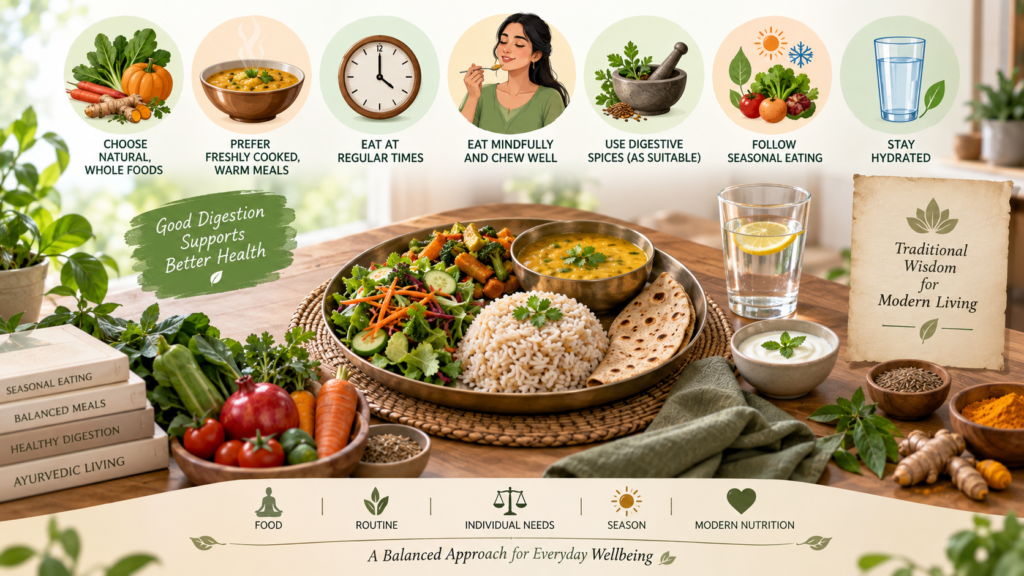
A Simple Indian Digestive-Health Plate
For a practical everyday meal, consider:
½ Plate
Vegetables and other plant foods, according to tolerance and dietary needs.
¼ Plate
A protein source such as dal, pulses, beans, dairy, eggs, fish, poultry or another suitable option.
¼ Plate
Rice, roti, millet or another appropriate carbohydrate source.
Add:
- a suitable fat source;
- fruit when appropriate; and
- fluids according to individual need.
The exact proportions do not need to be mathematically precise. The purpose is to create a mental model for balanced meals.
Foods to Limit Rather Than Fear
Depending on your individual health circumstances, it may be useful to moderate:
- highly processed foods;
- excessive added sugar;
- excessive alcohol;
- very large meals;
- frequent deep-fried foods;
- excessive salt; and
- foods that clearly trigger symptoms.
But avoid turning this into a universal list of forbidden foods. A sustainable diet leaves room for flexibility.
If You Have Acidity or Reflux
If reflux is a recurring problem, observe whether symptoms are associated with:
- large meals;
- late meals;
- lying down soon after eating;
- alcohol;
- smoking;
- particular foods;
- excess body weight where relevant; or
- other individual triggers.
Do not assume every chest or upper-body symptom is acidity. New or severe unexplained chest pain requires appropriate medical assessment.
See DG-002 — Understanding Acidity and Heartburn for a more detailed discussion.
If You Have Bloating
Bloating can have many causes. You may want to observe:
- meal size;
- eating speed;
- constipation;
- carbonated beverages;
- dietary changes;
- legumes;
- certain fermentable foods;
- stress; and
- other individual patterns.
Do not automatically eliminate large categories of food. If bloating is persistent, progressive or associated with other warning signs, seek medical evaluation.
See DG-004 — Understanding Bloating.
If You Have Constipation
A supportive routine may include:
- appropriate fibre;
- adequate fluid intake;
- physical activity;
- regular meals; and
- responding to bowel signals.
But persistent constipation, new significant changes, blood in stool, unexplained weight loss, severe pain or vomiting require appropriate medical assessment.
Ayurveda and Modern Medicine: Can They Work Together?
Yes—when the roles are understood clearly.
Modern medicine provides established approaches to:
- diagnosis;
- investigation;
- acute care;
- chronic disease management;
- medications;
- surgery; and
- emergency treatment.
Ayurveda provides a traditional framework emphasizing:
- diet;
- daily routine;
- individualized lifestyle;
- herbs and traditional preparations; and
- broader concepts of wellbeing.
An integrative approach does not require rejecting one system in favour of another. It requires appropriate use, safety, evidence awareness and individualized care.
When Traditional Dietary Advice Needs Extra Caution
Speak with an appropriate healthcare professional before making major dietary or herbal changes if you:
- are pregnant or breastfeeding;
- have diabetes;
- have kidney or liver disease;
- have significant gastrointestinal disease;
- have a history of eating disorders;
- take multiple medicines;
- are undergoing cancer treatment;
- have significant nutritional deficiencies; or
- have other complex medical conditions.
Children and older adults may also require individualized nutritional advice. If any of this applies to you, arranging a consultation is a reasonable next step.
Don’t Confuse a Dietary Philosophy With a Treatment
A diet can support health. It can help create favourable conditions for wellbeing. It can sometimes contribute to symptom improvement. But diet should not automatically be presented as a cure for disease. For example:
Healthy food can support digestive wellbeing.
That does not mean:
Diet alone can treat every digestive disorder.
This distinction is central to responsible health communication.
Your Everyday Ayurvedic-Inspired Digestive Routine
You can summarize the approach in ten habits:
- ☐ Eat according to genuine hunger where practical.
- ☐ Prefer fresh, varied and nourishing foods.
- ☐ Eat at a comfortable pace.
- ☐ Avoid consistently oversized meals.
- ☐ Include vegetables and appropriate fibre.
- ☐ Include suitable protein.
- ☐ Use spices and herbs as foods thoughtfully.
- ☐ Hydrate according to individual need.
- ☐ Maintain regular movement and sleep.
- ☐ Seek medical evaluation when symptoms are persistent or concerning.
A One-Day Example
Here is one possible pattern—not a prescription.
Morning
Water according to individual need. Gentle movement or yoga.
Breakfast
Vegetable poha or another balanced traditional breakfast.
Mid-morning
Fruit if hungry.
Lunch
Rice or roti + dal + seasonal vegetables + suitable accompaniment.
Afternoon
A light snack if genuinely hungry.
Evening
Gentle walk or another form of physical activity.
Dinner
A comfortable, balanced meal appropriate to appetite and routine.
Before Bed
Relaxation, breathing or quiet time. Avoid unnecessary late-night eating if it contributes to discomfort.
The Most Important Principle: Individualization
A diet chart can provide ideas. It cannot know your:
- constitution;
- medical history;
- nutritional needs;
- medications;
- allergies;
- food intolerances;
- lifestyle;
- work schedule;
- sleep pattern; or
- digestive condition.
Therefore, use dietary frameworks as starting points, not unquestionable rules. Your food should support your life—not make your life revolve around food rules.
Final Takeaway
Ayurvedic dietary traditions offer a rich framework for thinking about food, digestion, routine and individual differences.
Modern nutrition adds another essential perspective: nutritional adequacy, food safety, dietary diversity and evidence-based understanding of health.
A practical approach can bring these perspectives together. Start with the fundamentals:
Eat a varied diet.
Choose nourishing foods.
Eat with awareness.
Respect individual tolerance.
Maintain an appropriate routine.
Move regularly.
Sleep adequately.
Manage stress.
Use traditional practices thoughtfully.
And seek medical evaluation when symptoms require it.
The purpose of an Ayurvedic-inspired diet should not be to create another rigid set of rules. It should help you develop a more conscious relationship with food and daily health.
Food can nourish. Routine can support. Awareness can guide. Medical care remains essential when it is needed.
Frequently Asked Questions
Is an Ayurvedic diet suitable for everyone?
No single diet is suitable for everyone. Dietary needs depend on individual health, nutritional requirements, medical conditions, medications, food preferences and tolerance.
What is the best Ayurvedic food for digestion?
There is no single food that is universally “best” for digestion. Traditional Ayurveda emphasizes individualization, while modern nutrition supports dietary variety and adequacy.
Should everyone drink warm water in the morning?
No. Warm water may be comfortable for some people, but there is no requirement for everyone to drink it, and it should not be considered a universal detox treatment.
Should I avoid curd at night?
There is no universal rule that everyone must avoid curd at night. Individual tolerance, dietary pattern and specific health circumstances matter.
Is ghee good for digestion?
Ghee is a traditional food with an important place in Indian cuisine and Ayurveda. It can be part of a balanced diet for many people, but it is still a concentrated source of fat and energy and should not automatically be treated as a digestive medicine.
Are millets better than rice?
Neither needs to be universally labeled “better.” Both can fit into a balanced diet. The appropriate choice depends on the individual’s nutritional needs, preparation, portion and overall dietary pattern.
Should I stop eating spicy food if I have acidity?
Not necessarily. Some people find that certain spicy or heavily seasoned foods worsen reflux or other symptoms. Observe your individual response rather than following a universal prohibition.
Can Ayurvedic food cure IBS, acidity or other digestive diseases?
Dietary changes may support wellbeing and may help symptoms in some circumstances, but they should not be presented as a universal cure. Persistent or concerning symptoms require appropriate clinical evaluation.
Can I use Ayurvedic herbs with my medicines?
Not without considering potential interactions and individual circumstances. Tell your healthcare professional about all herbal and Ayurvedic preparations you use.
Is detox necessary for digestive health?
Commercial detox programs are not necessary for the normal functioning of a healthy digestive system. A balanced diet, appropriate hydration, movement, sleep and medical care when needed provide a more sustainable foundation.
Related Articles
Visit the Digestive Health topic page or the Ayurveda & Traditional Health topic page for the full range of related content on this site.
Digestive Health
The following related articles are part of the approved content corpus; several are not yet migrated to WordPress and are listed here as plain text rather than linked, per the project’s no-fabricated-link rule.
- DG-001 — Digestive Health: A Practical Guide to a Healthy Digestive System
- DG-002 — Understanding Acidity and Heartburn: Causes, Symptoms and When to Seek Medical Care
- DG-003 — Daily Gut Routine: Simple Habits for Better Digestive Health
- DG-004 — Understanding Bloating: Common Causes and Practical Ways to Manage It
- DG-005 — Understanding the Gut–Brain Connection: How Stress, Emotions and Digestion Interact
- DG-009 — When Digestive Symptoms Need Medical Evaluation
- DG-013 — 7-Day Digestive Fitness Starter Plan
- DG-017 — Daily Gut Routine Checklist
- DG-018 — Recommended Yoga Practices for Digestive Health
Ayurveda & Whole-Person Health
The following related articles are part of the approved content corpus; several are not yet migrated to WordPress and are listed here as plain text rather than linked, per the project’s no-fabricated-link rule.
- AY-001 — Ayurvedic Diet
- Holistic Health: A Practical Guide to Whole-Person Wellbeing
- AU-010 — Dr. Sarang Patil’s Approach to Integrative Health
Related Resource
DG-016 — Ayurvedic Diet Chart
This article can serve as the explanatory foundation, while the downloadable chart can provide a simpler visual reference for readers who want to apply the principles to their daily routine.
Medical Disclaimer
The information provided in this article is intended for general educational purposes and is not a substitute for individualized medical advice, diagnosis or treatment.
Ayurvedic concepts described here represent traditional health frameworks and should not automatically be interpreted as equivalent to modern medical diagnoses or evidence-based treatments.
Herbal and Ayurvedic preparations may have biological effects and may interact with medicines. Consult an appropriately qualified healthcare professional before using concentrated preparations, particularly if you have a medical condition, take regular medicines, are pregnant or breastfeeding, or have other special health needs.
If you experience persistent, severe, worsening or unexplained digestive symptoms, seek appropriate medical evaluation.
About Dr. Sarang Patil
Dr. Sarang Patil’s approach to health brings together clinical medicine, preventive health, lifestyle awareness and a broader understanding of whole-person wellbeing.
The purpose of this platform is to make health information practical and accessible while respecting both the value of traditional health wisdom and the importance of responsible, evidence-aware medical care.
Understand the tradition. Respect the individual. Use health practices thoughtfully. Seek medical care when it is needed.